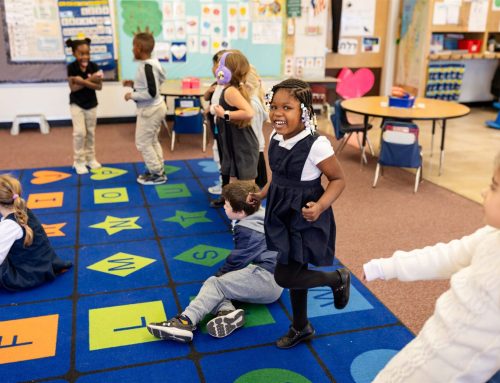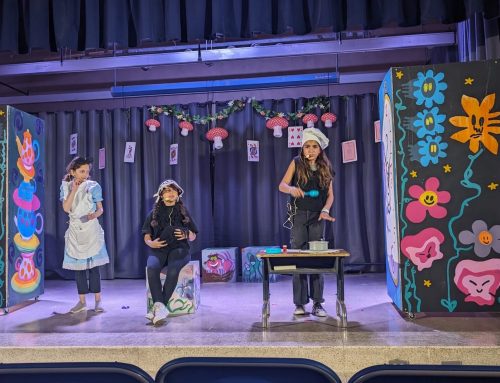
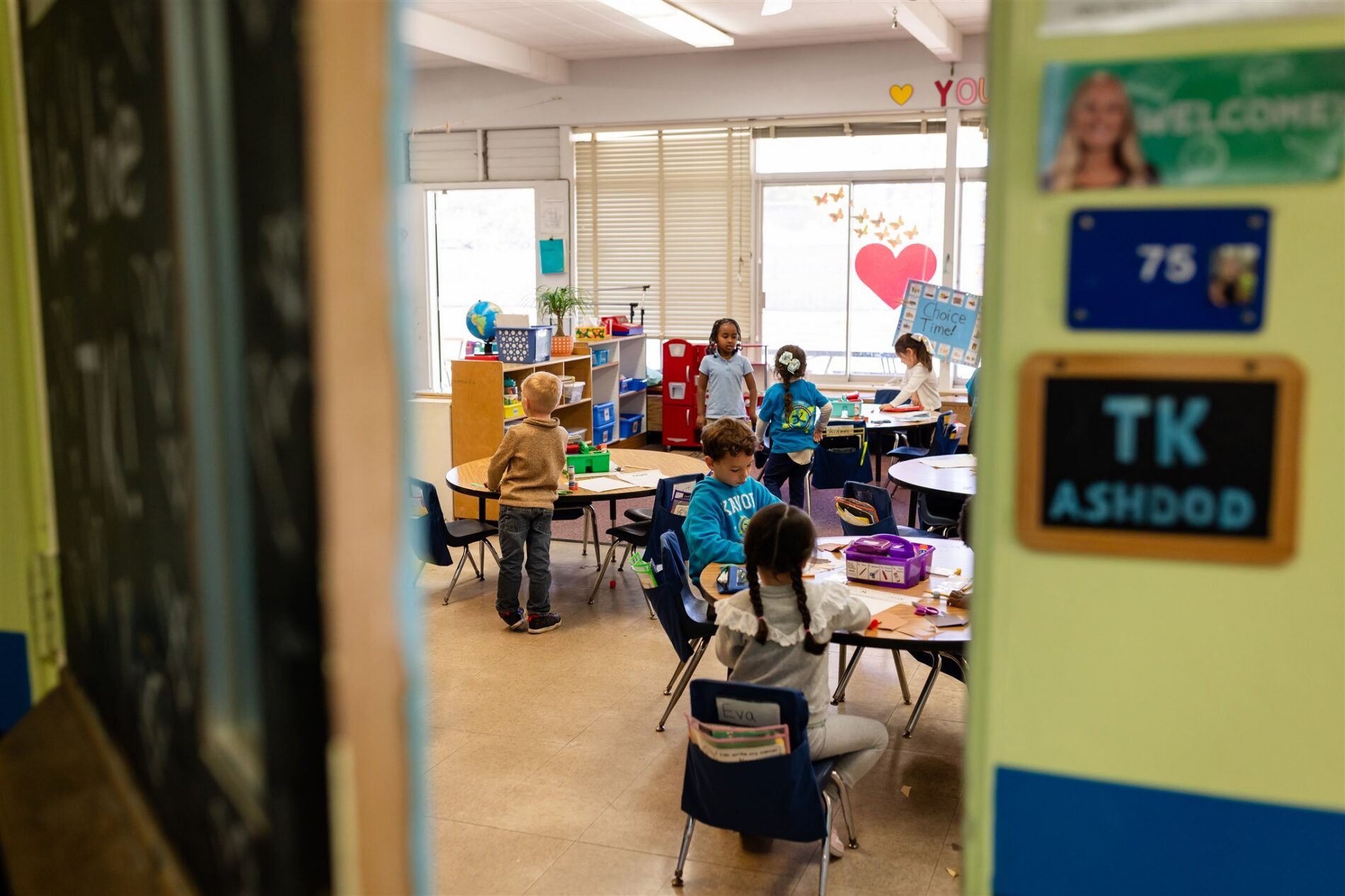
At Kavod Charter School, a tuition-free public charter school serving TK-8th grade students in San Diego, dual language learning is woven into every school day. For families raising a bilingual child they may wonder the impact of Hebrew and Spanish practice is really building. Research on early language learning points to some remarkable benefits, many of which you can already see at home, at the dinner table, and in the classroom.
What Does the Research Say About Bilingual Children?
Research on early language learning consistently shows that children who grow up bilingual tend to develop stronger problem-solving skills, sharper memory, and a greater ability to shift between tasks than children who speak only one language. Learning two languages early asks a young brain to constantly organize, compare, and select the right word, a mental workout that builds cognitive flexibility over time. Bilingual children also tend to show a heightened awareness of other perspectives and cultures, since language and culture are so closely connected. The benefits go beyond academics as well: many families find that raising a bilingual child strengthens communication at home, deepens ties to extended family traditions, and builds a kind of confidence that carries into every subject at school.
5 Benefits of Raising a Bilingual Child
Take a closer look at what the research shows, and what it can look like in everyday life.
1. Stronger Problem-Solving and Critical Thinking Skills
Switching between two languages requires the brain to manage more information at once, which strengthens the same mental muscles used for problem-solving, planning, and critical thinking. Many educators notice that bilingual students are quick to find more than one way to approach a challenge, whether it’s a math problem or a disagreement on the playground.
2. Improved Memory and Focus
Holding two language systems in mind takes practice, and that practice pays off. Bilingual children often show stronger working memory and an easier time tuning out distractions, since their brains are used to filtering between languages and staying focused on the task at hand.
3. Greater Cultural Awareness and Empathy
Language carries culture with it. Children who learn a second language are often exposed to new traditions, stories, and ways of seeing the world, which builds empathy and an appreciation for perspectives beyond their own. This kind of global awareness serves students well long after they leave the classroom.
4. Enhanced Communication Skills
Bilingual children often become especially attentive communicators. Learning to express the same idea in two languages helps kids think more carefully about word choice, tone, and how to make themselves understood, skills that carry over into their first language, too.
5. Expanded Opportunities Down the Road
The advantages of bilingualism stretch well into the future. From travel and college applications to career paths in a global economy, speaking more than one language opens doors that stay open for life.
How Kavod Families Nurture Bilingualism at Home
Language learning doesn’t stop at dismissal, and our Kavod community is full of families finding simple, everyday ways to keep it going. A few favorites from our explorers’ families:
- Ask your child to teach you a new Hebrew or Spanish word each week, even if you don’t speak either language yourself.
- Label household items in Hebrew or Spanish and turn it into a family scavenger hunt.
- Play music or watch a favorite show in the target language during car rides or family movie nights.
- Celebrate small wins: a new phrase, a correctly conjugated verb, the same way you’d celebrate a soccer goal.
- Bring language into family traditions by learning a related song, recipe, or story together.
Want to go deeper? Explore how modern Hebrew and Spanish are taught throughout the Kavod day, all the way through the International Baccalaureate Middle Years Programme.
Curious what else makes our community distinct? Take a look at our recap of this year’s Culture Fair, where explorers and families celebrate the diversity of our school community together. For a refresher on what sets us apart, revisit why Kavod is an award winning school. And if you’re new to the term, our blog on what Kavod means and how respect shapes our community is a great place to start.
Frequently Asked Questions
What age is best to start learning a second language?
Younger children tend to pick up new sounds, vocabulary, and grammar patterns more naturally than older learners, which is why early language learning during the elementary years is so valuable. That said, it’s never too late for a child to benefit from learning a second language.
Does learning two languages confuse young children?
No. Research shows that children are fully capable of learning multiple languages at once without delaying their overall language development. Occasional mixing of words between languages is a normal part of the process, not a sign of confusion.
How does bilingual education support learning beyond language class?
The cognitive flexibility built through language learning tends to carry over into other subjects, supporting stronger problem-solving in math, reading comprehension, and even social-emotional skills like empathy and patience.
Can families support bilingual learning at home even if they don’t speak Hebrew or Spanish?
Absolutely. Showing curiosity, asking your child to share what they’re learning, and celebrating their progress goes a long way, you don’t need to be fluent yourself to be a big part of your child’s language journey.
What languages does Kavod teach?
Kavod explorers begin modern Hebrew in TK and start Spanish in middle school, continuing both languages through middle school, where they can earn high school credit in Hebrew and/or Spanish.
Every day, our Kavod community gets to watch this research come to life in our explorers, in the words they bring home, the questions they ask, and the confidence they carry into new challenges. We’d love to hear how bilingualism is showing up in your household this year. Share your family’s language milestones with us by tagging @KavodCharterSchool – we might just feature your explorer in an upcoming post!
About Kavod Charter School:
Kavod is a tuition-free public charter school in San Diego committed to growing the next generation of bilingual, globally aware leaders who will make the world a more respectful place. We offer modern Hebrew and Spanish to diverse TK-8th graders alongside a rigorous curriculum, the International Baccalaureate Middle Years Programme, and enriching electives. As a non-religious, dual language elementary and middle school, we are consistently ranked as a top 5% charter school in California and the nation. Kavod means respect – we believe respect makes a world of difference. Enroll with Kavod today!